Coastal & Salt-Air Corrosion Repair
KneppKraft is a licensed structural contractor that has worked ocean-front conditions since 1985, starting as a marine repair business on the Alamitos Bay docks in Long Beach. Salt air corrodes rebar and spalls concrete faster on ocean-front and near-coastal buildings than it does inland.
Salt damage starts under the surface, before it shows.
Salt-driven corrosion is progressive: by the time rust staining or a visible crack shows up, the rebar underneath has usually already lost cross-section. A coastal building that looks fine from the street can have active corrosion happening inside the concrete.
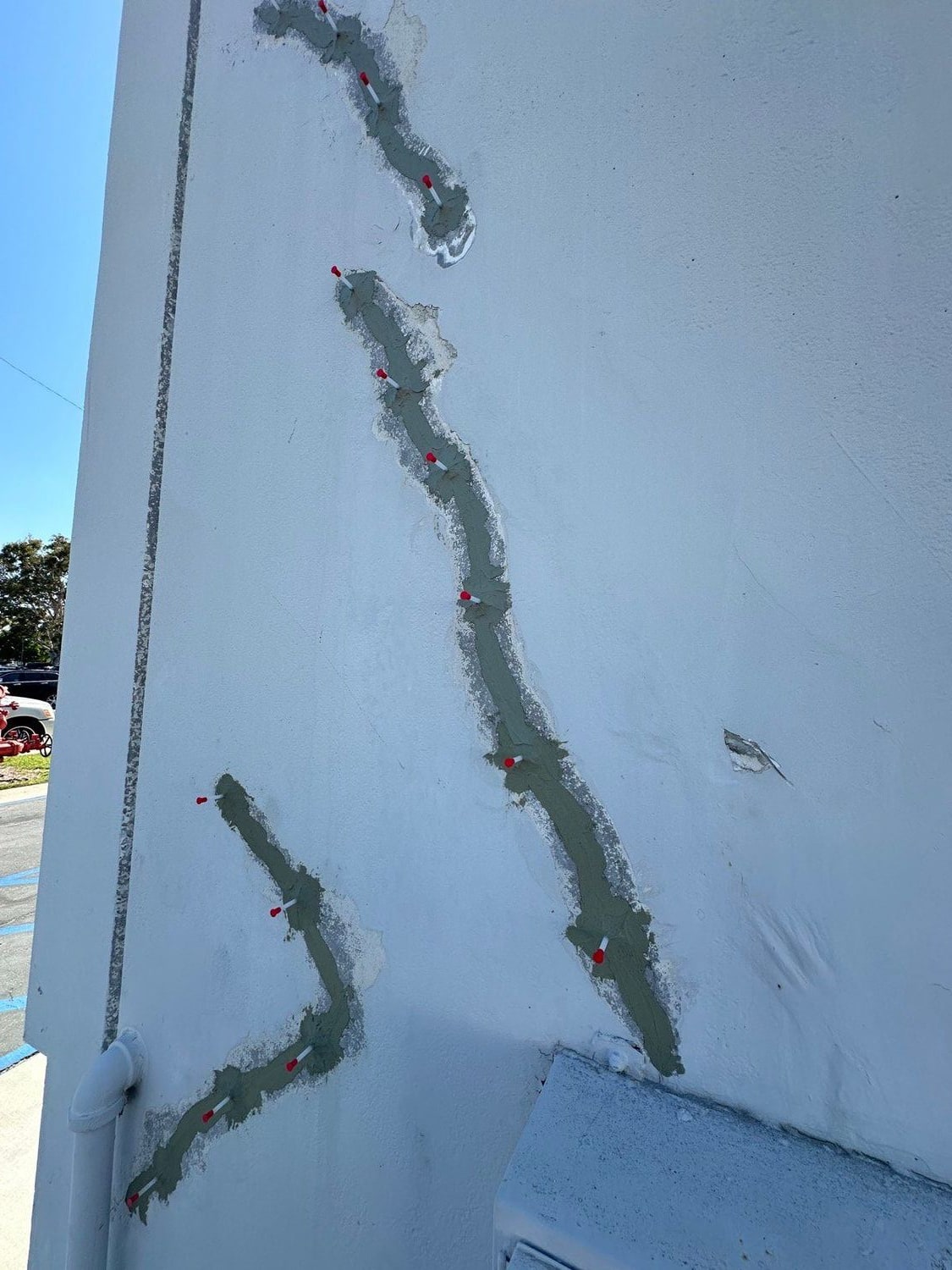
KneppKraft treats spalled concrete and corroded rebar and injects salt-air cracking on grade beams, columns, and slabs. It’s the same structural repair practice used across the rest of our work, applied to buildings that live in salt air.
What’s included
- Spall repair & rebar treatment
- Epoxy crack injection, salt-air cracking
- Grade beam, column & slab repair
- Coordinated with your structural engineer
A marine background, not a marketing line.
KneppKraft started in 1985 as “Knepp-Craft,” a yacht repair business on the Alamitos Bay docks in Long Beach, founded by a former ships master and Alaska commercial fisherman. The company’s coastal-conditions knowledge comes from that marine origin: forty years of understanding what salt air does to a structure over time.
The salt keeps working while we do, and after we leave.
On an ocean-front building the repair happens in the same air that did the damage. Chlorides settle on every surface, including reinforcing steel that has just been uncovered, so the sequence is tighter than it would be further inland: open it, wash the salt off, treat and close in one push rather than leaving bare steel out through a foggy night. Onshore wind sets its own limits, because it decides when a lift goes up on the water side and whether a coating can be sprayed at all.
The second thing to plan for is that one visit does not end it. Buildings in salt air keep corroding, and the elevations facing the water get there first, so the sensible way to budget is a program rather than an emergency: repair the worst face, put the rest on a set interval, and catch the next round while it is still coating and sealant work. That is a smaller line item than the structural repair it becomes if nobody looks again.
- Salt washed off the substrate before anything is coated
- Bare rebar treated and closed in one push, not left open between visits
- Lift and spray work timed against the onshore wind
- Water-facing elevations phased first
- The next look scheduled, not left to the next spall
- Coating and sealant upkeep budgeted with the structural work
Seeing corrosion or cracking?
Send photos of the corrosion or cracking: we’ll tell you what’s happening underneath.
Request an Assessment